Next location: westbound eastbound
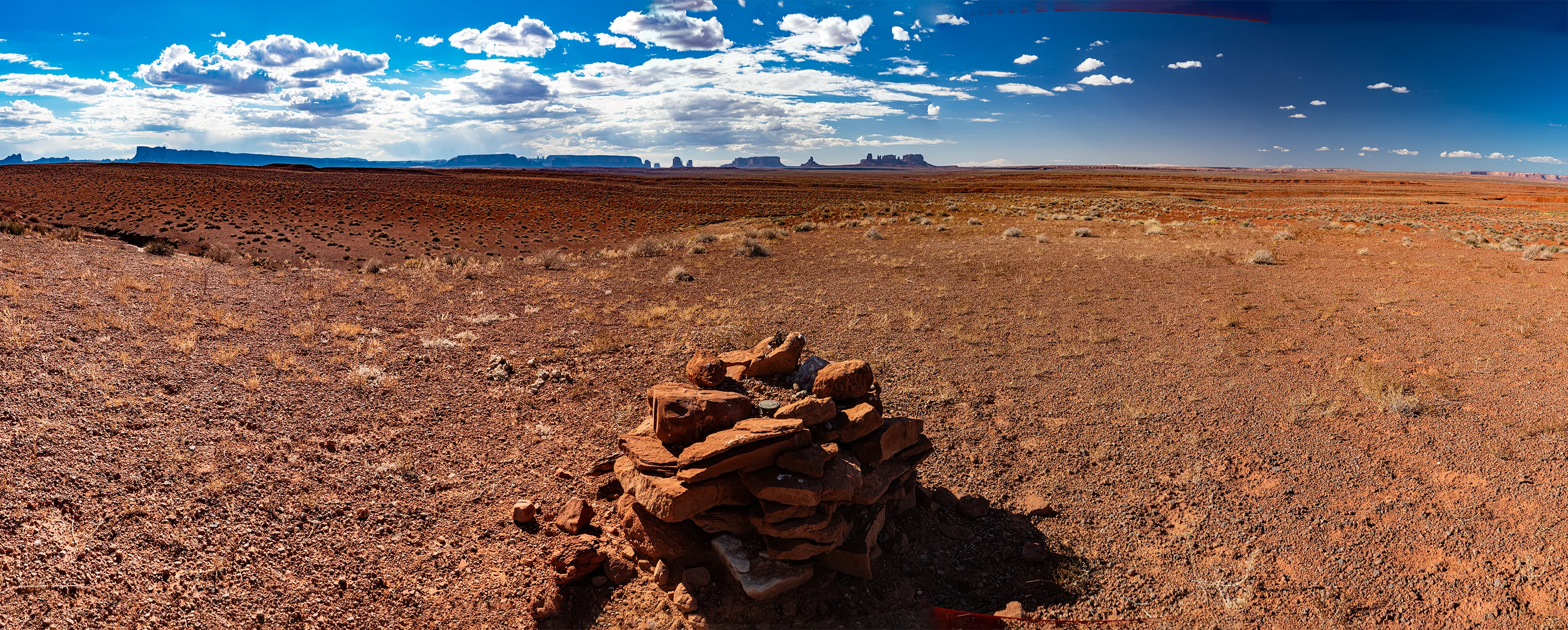
South of Mexican Hat, Utah, when the GPS indicates we’re at the border, we begin our walk west for a couple of miles, stalking toward Monument Valley Navajo Tribal Park, which floats on the horizon like a flotilla of battleships. The majestic park, a major tourist destination, is dwarfed by the immense space of the surrounding landscape. The desert dirt feels like plush carpet underfoot; not much grows here. We see burrows two inches in diameter and four inches in diameter, but no creatures. We see desiccated horse dung but no evidence of cattle and nothing for them to eat. There are no fences anywhere, but we see meandering tracks of a four-wheel drive vehicle that seem to be heading generally west. Finally we spy Mile Post 229 from a quarter mile away; up close it looks like a mini Mont Saint Michel, a tidal island on the vast desert sea.
Traversing this landscape is a challenge for outsiders, unfamiliar with the austere, waterless expanse. We intuit, instinctively, that we need to grip our water bottles and the GPS tightly– this is not a place for hodological wandering for outsiders. Our lack of familiarity stands in contrast with the spiritually-based muscle memory of the residents of the Dinétah. The Navajos’ profound connection to their homeland was implied by Barboncito, revered as a principal negotiator in the Treaty of 1868. After four years of forced exile in Bosque Redondo, New Mexico, Barboncito (Hastiin Dághaaʼ, Navajo Head Chief) told William Tecumseh Sherman, “…the Navajo people had endeavored to make the best of their situation, but the land at Bosque Redondo ‘did not know them.’”1 Barboncito argued successfully for the Navajos’ return to the land that did know them; unlike many Indigenous nations sent to unfamiliar land in Indian Territory, the Navajos returned to their homeland.
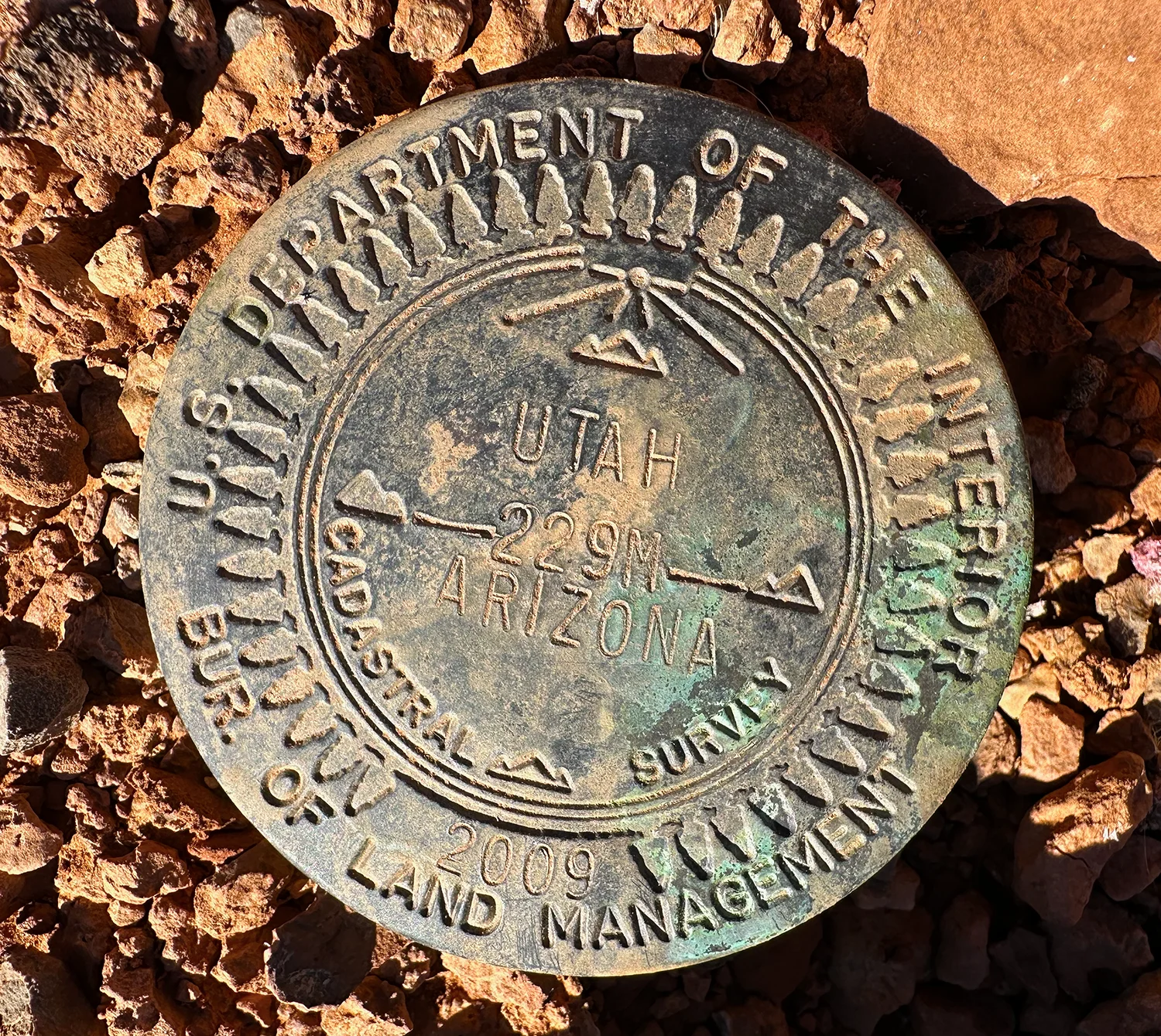
And now we’re walking out on land that, to put it bluntly, does not know us. We marvel at the still-blaring light of mid-October, the silence that tells of the distance to asphalt, the burrs and cactus we step around that remind us how out of place we are. We are confronted with how much we don’t see in or understand about this place. Mile 229 is somehow a reassuring anchor point for closet Cartesians like us, even if it serves as a reminder of how much we have to learn about this place. Walking across the desert carpet we fall into a rhythm that prompts us to think about others who traverse great spaces, whether on the Australian outback, the Sahel of northern Africa or the Inuit on Baffin Island. As Spanish poet Antonio Machado suggests,
Traveler, your footprints
are the only road, nothing else.
Traveler, there is no road;
you make your own path as you walk.2
____________________________
Footnotes